


Cribbage - Classic Card Games
4.495.00 Reviews
App Specs
- Version
- 1.1.5.444
- Updated On
- License
- Free
- Downloads
- 100,000+
- Developer
- MobilityWare
- Categories
- Card
- Platform
- Android
Screenshots
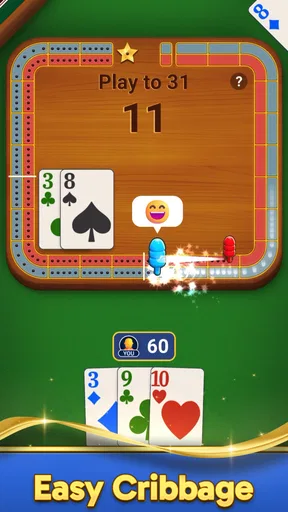
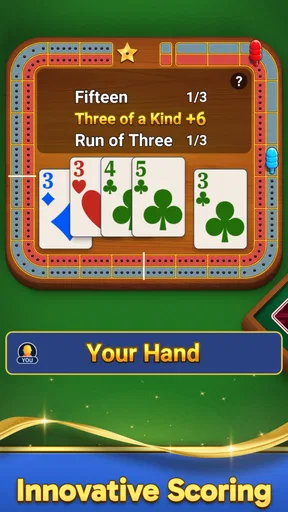

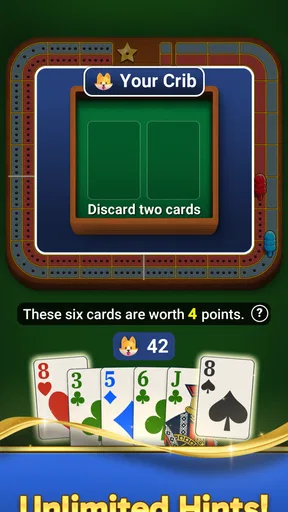

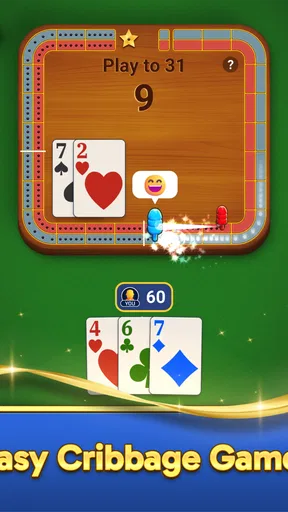

 Analysis by AppCompare
I approached Cribbage - Classic Card Games expecting a straightforward digital version of a traditional card game, but what stood out most was how strongly it depends on one capability: turning cribbage’s scoring and decision-making into something practical for short, focused sessions. That matters because cribbage is not simply about drawing good cards. You are constantly weighing the immediate value of a hand against what might help your opponent, especially when choosing which cards to place in the crib.
As a free card game from MobilityWare, it fits naturally into the kind of spare time when I want something more thoughtful than a quick matching game but less demanding than a long strategy title. I found it easiest to enjoy when I treated each hand as a compact puzzle rather than rushing toward the end of a match. The game’s appeal comes from that balance: the rules are familiar to experienced players, while each deal still creates a fresh set of choices.
The store presents it as a classic card game built for strategy and play on the go, and that description is fair without telling the whole story. The important question is whether the digital format makes cribbage easier to pick up and enjoyable to revisit. In my experience, it does a good job of making the core decisions visible, although players who want a large social card-game platform or a broad collection of unrelated games may find its focused design limiting.
Why the scoring-and-choice system is the real attraction
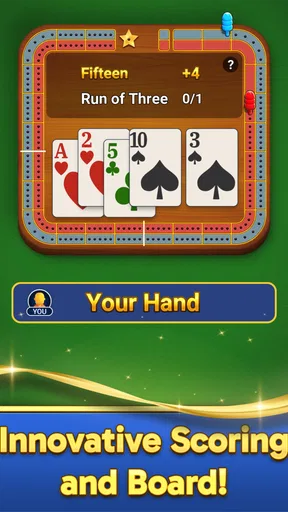
The most valuable feature here is not a decorative theme or a large collection of modes. It is the way the app gives cribbage’s central decisions a usable mobile format. A physical cribbage game asks you to remember scoring combinations, count carefully, and keep track of the board while also thinking about the cards you discard. On a phone, those tasks can become awkward if the interface gets in the way. Here, the digital presentation makes the hand itself the center of attention.
That changes how I play. Instead of spending all my energy checking whether a run, pair, fifteen, or combination has been counted correctly, I can concentrate on the more interesting question: which choice gives me the best overall position? This is especially useful for newer players, because the app can make the structure of a hand feel less intimidating than a physical game where everyone else already knows the scoring.
Cribbage rewards a particular kind of patience. A hand that looks attractive at first may be a poor choice if it sends useful cards into the opponent’s crib. Conversely, a slightly weaker personal hand can be sensible when it keeps the crib under control. That trade-off is what separates cribbage from many casual card games, and the app preserves that tension rather than reducing the experience to simply playing the highest card available.
The practical strength is that the app lets me spend more attention on decisions and less on bookkeeping. That sounds modest, but it has a real effect during a short session. I can play a hand while waiting for an appointment or taking a break, then stop thinking about it as soon as the match ends. The experience feels compact without being empty.
Worth Reading Before You Choose

EA SPORTS FC Mobile 26 Is a Bigger Football Game, but It Takes Time

Flipboard Shows What News Apps Must Do Beyond the Feed

Switching to Android Auto Means Rethinking Your Driving Routine

Google Calendar Makes a Crowded Week Easier to Manage

Ludo King Makes the Most of the Minutes Between Plans

Baby Panda World Brings Quick Play to Modern Phones, but Its Game Library Feels Busy
What a new player should understand before starting
If you have never played cribbage, the first barrier is not the card play itself; it is learning how points are formed. The game becomes much more approachable once you stop trying to memorize every possibility at once. I recommend beginning with three ideas: combinations that total fifteen, pairs, and sequences of consecutive cards. Those patterns appear often enough to give you a useful foundation, and the rest becomes easier as you see more hands.
The next lesson is the crib. Your discarded cards do not simply disappear. They become part of a separate scoring opportunity, so every discard has two consequences. I found that beginners often focus only on improving their own four-card hand. A better habit is to compare two questions: how many points might this discard add to my hand, and how likely is it to improve the opponent’s crib?
The board position also changes the value of a decision. A risky hand may be worthwhile when you are behind and need to catch up, while a safer choice can make more sense when you are ahead. This is one of the reasons I would not describe the game as random entertainment. Luck determines the cards, but the quality of your choices determines how well you use them.
Players who already know cribbage will probably appreciate the directness more quickly. There is no need to learn an entirely new card system, and the mobile format makes it convenient to practice decisions without setting up a physical board. Still, experienced players should not assume that familiarity automatically makes every match easy. The interesting mistakes are often subtle: keeping a hand with attractive points while ignoring the crib, or choosing a discard that looks harmless but creates several possible scoring combinations for the other side.
How the digital format works in everyday play
In practice, I use this game in two different ways. Sometimes I play casually, making decisions at a relaxed pace and enjoying the rhythm of one hand after another. At other times, I treat it as a small exercise in card evaluation. That second approach is more rewarding when I pause before discarding and explain the choice to myself: keep the strongest scoring potential, reduce the crib’s opportunities, or accept a lower immediate total for a better board position.
That pause is a useful habit because mobile card games can encourage automatic play. A large button or an obvious card placement can make it tempting to act without considering the consequences. Cribbage is better when I resist that impulse. The app works best when I use its convenience to think more clearly, not when I let convenience replace thinking.
A realistic everyday scenario is a short evening break after work. I may have enough time for a few hands but not enough attention for a long campaign or a story-driven game. This is where the focused design makes sense. I can start quickly, engage with a meaningful decision almost immediately, and put the phone down without feeling that I have abandoned a complicated progression system.
It also works well for someone trying to refresh an old family pastime. If you learned cribbage from a relative years ago but no longer have a regular partner, a mobile version can keep the rules familiar. I would still recommend playing a physical game when you have company, because handling real cards and discussing decisions has a social quality the phone cannot reproduce. The app is better as a personal practice tool or a convenient substitute when another player is not available.
One useful workflow is to focus on one decision type per session. For example, I might pay attention only to crib discards, then spend another session watching how different hands affect the best play during the pegging portion. This prevents the rules from becoming a blur and turns casual matches into deliberate practice. It is a simple approach, but it gives the game more lasting value than repeatedly playing without reflecting on why a choice worked.
The best situation for this particular game
The strongest use case is the player who wants a compact strategy game with traditional rules and a low commitment. If you enjoy solitaire, trick-taking games, or other card games where a few decisions can change the outcome, cribbage offers more depth than its simple deck might suggest. It is especially suitable for people who like learning through repetition rather than reading a long tutorial first.
I also think it suits former cribbage players who want to rebuild confidence. The app gives you a way to revisit hand patterns and discard logic at your own pace. You can concentrate on recognizing combinations without needing to organize a board, shuffle cards, or find an opponent. That convenience removes enough friction to make regular practice realistic.
Another good scenario is travel or waiting time when you want something that does not require a large commitment. The game’s card-based structure makes each decision self-contained. I do not need to remember a complicated world, manage a character build, or follow a narrative thread. I can simply return to the next hand and start evaluating the cards in front of me.
However, this focus is also the reason some people should skip it. If you want a fast game where every move is immediately obvious, cribbage may feel slow or overly analytical. If you prefer a large multiplayer community, chat, tournaments, or a wide choice of card variants, this is unlikely to replace a broader card-game platform. It is aimed at the particular pleasure of cribbage, not at being an all-purpose digital game room.
Small decisions that improve the experience
My first practical tip is to stop judging a hand only by its current score. A hand with several cards close together may have more potential than a hand containing one obvious scoring pair. Look for the ways cards can combine, then compare that potential with the danger of helping the crib. The best discard is often the one that leaves you with several reasonable scoring routes rather than one flashy combination.
My second tip is to separate offensive and defensive thinking. When I am behind, I am more willing to keep a hand with higher upside, even if it gives the crib a little more to work with. When I am ahead, I care more about limiting the opponent’s chances and avoiding careless risks. This makes the same card combination feel different depending on the board, which is a major part of cribbage’s depth.
My third tip is to use the app as a review tool after a questionable hand. Rather than immediately starting another match, I replay the decision mentally: was the problem the cards I kept, the cards I discarded, or the way I played them afterward? That short reflection is more valuable than simply blaming bad luck. It also helps reveal a common weakness: choosing for the hand alone while forgetting the crib.
A fourth insight is that speed is not a sign of skill in this game. Fast play can be comfortable once the patterns become familiar, but early on it often hides mistakes. I would rather take a moment to compare two plausible discards than make a quick choice and never understand why the hand went badly. The app’s portability makes that kind of thoughtful practice easy because I can play in small portions.
Where the trade-offs become noticeable
The main trade-off is focus. Because the experience is centered on cribbage, its value depends heavily on whether you enjoy that specific game. A player looking for constant novelty may eventually feel that the same rules are being revisited too often. I see that as a limitation of the format rather than a flaw in the core design, but it is important before installing a dedicated card game.
There is also a difference between learning the rules and mastering the decisions. A digital interface can make scoring easier to follow, but it cannot remove the need to understand why a discard is strong or weak. New players may still feel uncertain after the first few matches, particularly when several choices appear close. That uncertainty is normal, although anyone seeking an instant, effortless experience may find it frustrating.
The free price makes it easy to try without a financial commitment, and the Everyone age rating makes it suitable for a broad audience. Still, “easy to start” should not be confused with “shallow.” I found that the game becomes more demanding once I stop playing by instinct. The challenge comes from evaluating probabilities and board position, not from complicated controls.
Its technical requirements are also approachable for older supported devices, with the game requiring Android 8.0 or later. The current version is 1.1.5.444, which is useful to know when checking whether a phone or tablet can run it. I would not choose a device based on this game alone, but the requirement means it is not restricted to only the newest hardware.
The public response is positive overall, with an average rating of 4.4 from around 1.3 thousand ratings and more than one hundred thousand installs. Those figures suggest that the game has found an audience, but they should not replace personal judgment. A popular cribbage app can still be the wrong match for someone who dislikes slow card strategy, while a dedicated fan may enjoy it even if they usually avoid mobile games.
How it compares with physical cards and other mobile options
Compared with a physical cribbage board, the app wins on convenience. There is no setup, no shuffling, and no need to remember where the pegs were left. It is also a more private way to practice. I can work through decisions without feeling that another player is waiting for me to count or discard.
The physical version wins on atmosphere and conversation. Cribbage has a tactile quality that makes the score feel more personal, and playing across a table creates opportunities to explain choices or tease each other about a risky crib. I would not treat the app as a replacement for that experience. I see it as the version I use when the table, cards, and second player are unavailable.
Compared with solitaire, this game asks more of me strategically. Solitaire is often about finding a workable sequence from a changing layout, while cribbage repeatedly asks me to balance my own score against another side’s opportunities. Compared with fast shedding games, it is less immediately energetic but more rewarding when I enjoy analyzing small advantages.
Compared with broad card-game collections, its advantage is concentration. I do not have to sort through many unrelated rules before finding something I want to play. The disadvantage is obvious: if I want variety, another app with several card games may offer more long-term change. I would choose this one when cribbage itself is the reason I am opening the app, not merely because I want any card game.
Who will get the most from it
I would recommend it most strongly to people who enjoy thoughtful card play in short sessions. That includes beginners who want a manageable way to learn cribbage, returning players who want regular practice, and experienced players who appreciate having the game ready whenever they have a few quiet minutes.
It is also a good fit for someone who likes improving through small adjustments. You can make progress without unlocking a new character or collecting equipment. The improvement is in your own judgment: recognizing stronger combinations, protecting the crib, and adapting choices to the score. That kind of progress is easy to overlook, but it gives the game a satisfying reason to revisit.
I would be more cautious about recommending it to players who need strong social interaction, frequent content changes, or a broad selection of formats. It is not the app I would choose for a party, nor would I suggest it to someone who finds traditional card scoring tedious. Those players may be happier with a multiplayer-focused option or a collection that offers several faster games.
MobilityWare has kept the identity clear: this is a dedicated cribbage experience rather than a general entertainment package. The free entry point helps, and the mobile format makes practice convenient, but the lasting appeal depends on whether the underlying decisions interest you. In my case, the game earns its place because each hand gives me something specific to consider without demanding a large block of time.
My recommendation after spending time with it
Cribbage - Classic Card Games is worth trying if you want a focused, traditional card game that rewards careful choices instead of frantic reactions. Its best capability is the way it makes the scoring-and-discard puzzle usable on a phone, allowing me to practice and play without the setup that physical cribbage requires.
I would start with a few relaxed matches, then deliberately slow down around the crib decision. That is where much of the game’s character appears, and it is also where a beginner can learn the most. Pay attention not only to the points you hope to earn, but also to the combinations you might be giving away.
The game is free, rated for Everyone, and available for Android devices running 8.0 or later. Its release date was September 16, 2024, and its current version is 1.1.5.444. Those details make it a straightforward option to test, especially if you already enjoy classic card games.
My final view is positive but specific: this is not a universal card-game recommendation, and it does not need to be. It succeeds when I want cribbage’s quiet tension, compact sessions, and meaningful hand decisions. If that sounds like the kind of challenge you enjoy, it is a convenient way to keep the game close at hand. If you want variety or a lively social table, I would look elsewhere.
Pros
- Clear scoring system makes it easy to learn the basics.
- Quick rounds fit well into short breaks or casual play.
- Useful for practicing strategy against computer opponents.
- Classic rules preserve the traditional Cribbage experience.
- Simple card-focused design keeps matches easy to follow.
Cons
- Some advanced options may be limited compared with physical play.
- Computer opponents can feel predictable after extended sessions.
- Random card deals may occasionally make matches feel uneven.
- Ads may interrupt play in the free version.
- Small card details could be difficult to read on compact screens.
FAQs for Cribbage - Classic Card Games
What is Cribbage - Classic Card Games, and how is it played?
Cribbage - Classic Card Games is a digital version of the traditional card game for mobile devices. The main objective is to reach the target score before your opponent by creating scoring combinations during play and in your hand. The app generally includes the familiar crib, pegging, and counting phases, making it suitable for both newcomers learning the rules and experienced players looking for a quick game.
Can beginners learn how to play Cribbage through the app?
Yes, the game is designed to be approachable for players who are unfamiliar with Cribbage. Its interface helps organize cards, turns, and scoring, while game prompts can make the basic flow easier to understand. However, beginners should still take time to read the instructions carefully, because concepts such as the crib, pegging order, fifteens, pairs, runs, and the dealer’s advantage may take a few rounds to fully understand.
Does Cribbage - Classic Card Games offer offline play?
The availability of offline play may depend on the specific version and device, but classic Cribbage apps commonly provide a single-player mode against computer opponents without requiring a constant internet connection. This makes the game convenient for travel or short breaks. Some features, such as advertisements, updates, leaderboards, or online multiplayer, may still require an internet connection when they are included.
Are there different difficulty levels or game modes available?
Most versions of Cribbage - Classic Card Games include options intended to accommodate different playing styles, such as games against computer-controlled opponents and adjustable difficulty levels. Easier settings can help new players practice card combinations and pegging decisions, while harder opponents provide a more demanding challenge. Depending on the release, additional modes, statistics, customization, or multiplayer features may also be available.
Is Cribbage - Classic Card Games free to download, and does it contain ads or purchases?
The application may be available as a free download, but the exact monetization model can vary between Android and iOS versions. Free editions often display advertisements, while optional purchases may remove ads or unlock extra features, themes, or game options. Before downloading, users should review the store listing for current pricing, in-app purchase details, permissions, and any differences between the available versions.


